
How long do tires last? The answer depends on more than mileage. Some tires wear down after years of daily driving. Others still have tread but need replacement because of age, cracks, or damage. In Waco, heat and road conditions can also shorten tire life.
A tire should be replaced when the tread reaches 2/32 inch. You may need to replace it sooner if it has uneven wear, a bulge, a deep cut, or ongoing air loss. Many tire and vehicle makers also advise replacement between six and ten years.
There is no set mileage that works for every tire. Three things decide when a tire has reached the end of its useful life:
A tire may have plenty of tread but still be too old to trust. A newer tire may wear out early because of poor alignment or low air pressure.
The National Highway Traffic Safety Administration says tires should be replaced at 2/32 inch of tread. Drivers should begin watching them closely at 4/32 inch, mainly during wet weather.
Even the same type of tire can wear at a different rate on two cars. Driving habits and vehicle care make a large difference.
Common causes of early tire wear include:
Always use the air pressure listed on the driver-side door label. The pressure printed on the tire sidewall is not the recommended setting for your car.
Use this tire tread depth chart as a simple guide:
| Tread Depth | Tire Condition | Recommended Action |
| 8/32 inch or more | Plenty of tread on many passenger tires | Check it each month |
| 6/32 inch | Moderate tread remains | Keep watching for wear |
| 4/32 inch | Wet grip has dropped | Start planning replacement |
| 2/32 inch | Minimum replacement point | Replace the tire |
AAA tested worn all-season tires on wet roads at highway speed. Passenger cars with 4/32-inch tread needed about 87 more feet to stop than cars with new tires. Wet handling was also worse.
This is why waiting until 2/32 inch is not always the best choice for Waco drivers who often use I-35 or drive during heavy rain.
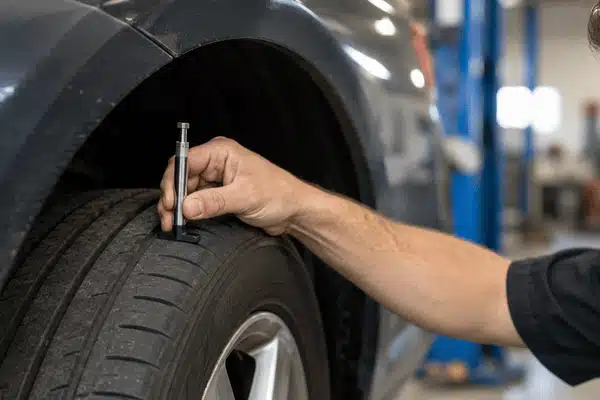
A tire tread gauge gives the best reading. Check the inner, middle, and outer grooves. Take readings in more than one place because wear may not be even.
The penny test tire tread check can help when you do not have a gauge.
Place a penny into a main tread groove with Lincoln’s head pointing down. If you can see the top of his head, the tread is near 2/32 inch.
The penny test is only a quick check. It will not show tire age, hidden damage, or uneven wear. Have the tire inspected when the result is close.
Knowing how to tell how old a tire is can help you avoid driving on aged rubber.
Look for the DOT code on the sidewall. The last four numbers show the week and year the tire was made.
For example, a code ending in 2322 means the tire was made during the 23rd week of 2022.
The full code may only appear on one side. You may need to look behind the tire or ask a technician for help.
Tire age begins on the date it was made, not the date it was installed. Remember to check spare tires, trailer tires, and tires on low-mileage cars.
Some tire problems need attention right away.
Stop driving and get help if you notice:
Other signs call for an inspection soon:
Wear patterns can also point to other problems. Wear in the center may mean the tire has too much air. Wear on both edges may mean pressure is too low. Wear on one side often points to an alignment issue.
Waco sees many days above 100°F each year. Heat can speed up tire aging, mainly when a tire is low on air or sits in direct sunlight for long periods.
Texas also ended yearly safety inspections for most non-commercial vehicles on January 1, 2025. McLennan County does not require the emissions tests that remain in some other Texas counties.
That means many Waco drivers no longer get an automatic yearly reminder to have their tires checked.
A few basic habits can prevent early wear:
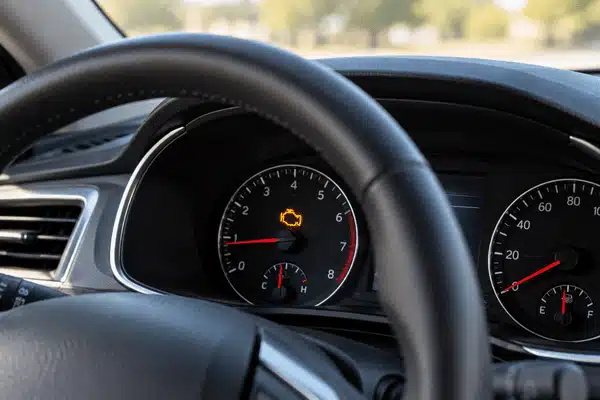
Do not rely only on the tire pressure warning light. TPMS checks air pressure. It does not measure tread depth, age, alignment, or tire damage.
There is no average that fits every driver. Tire life depends on tread, age, mileage, road use, and care. Replace the tire when one of these limits is reached.
Yes. Rubber can weaken from age, heat, sunlight, and storage. Check the DOT date code even when the tread looks good.
Tires at 4/32 inch are above the 2/32-inch replacement point. However, wet braking is already worse at that depth. It is a good time to plan for new tires.
No. TPMS only checks tire pressure. It cannot detect low tread, old rubber, cracks, or uneven wear.
Sometimes, but the replacement must match the vehicle and the other tires. Large tread differences can affect handling and some all-wheel-drive systems. Ask a technician before replacing only one.
Tire life comes down to tread, age, damage, and how the vehicle is used. Check your tires each month and do not wait for a blowout or warning light. Book a tire inspection with Texas Star Tire & Auto Repair in Waco today and get a clear quote before you replace anything.