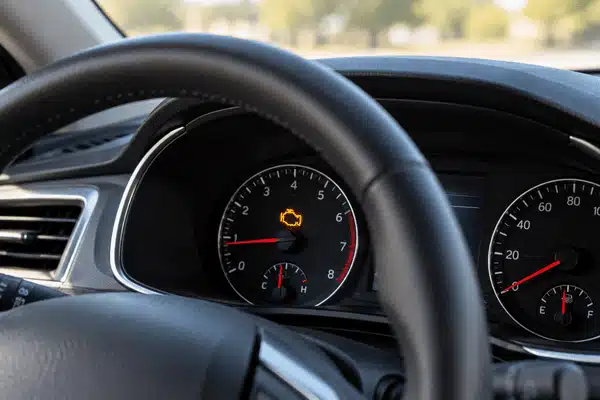

Your tire pressure light comes on during a cold morning drive, but your tires look fine. Should you be worried? Looks can be misleading. The National Highway Traffic Safety Administration (NHTSA) notes that underinflated tires are visually difficult to detect.
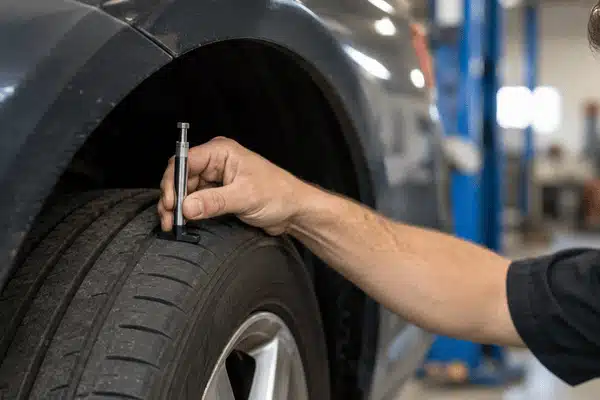
Cold weather often causes the warning, though a slow leak or faulty sensor could also be responsible. Before hitting the road, check your tire pressure with a gauge. You may only need to add air, but a warning that keeps coming back deserves a closer look.
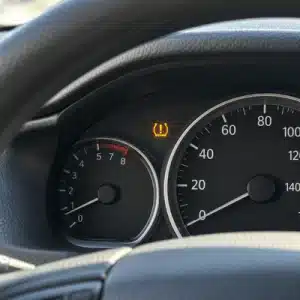
Your car’s Tire Pressure Monitoring System (TPMS) keeps watch for low tire pressure. When the warning appears, it means your tires need checking.
According to NHTSA, a lit TPMS symbol means at least one tire is significantly underinflated, and you should check the pressure as soon as possible.
TPMS has been required on most new passenger vehicles since the 2008 model year under National Highway Traffic Safety Administration (NHTSA) rules. The system is designed to alert drivers when a tire’s pressure drops to roughly 25% below its recommended level.
The federal standard behind it, FMVSS No. 138, covers passenger cars, light trucks, and vans with a gross vehicle weight rating of 10,000 pounds or less (except those with dual wheels on an axle). It requires the warning to come on within 20 minutes of driving once a tire falls to that level.
That threshold is lower than many drivers expect. On a tire with a recommended pressure of 35 PSI, for example, 25% below works out to about 26 PSI. That’s why NHTSA says the TPMS is not a substitute for regular tire maintenance and still recommends a monthly check with an accurate gauge.
The low-pressure warning uses one of two federally approved symbols: a tire cross-section with an exclamation mark inside, or a top view of a car showing all four tires.
Here’s what different warnings may mean:
| What You See | What It Means |
| Solid warning light | One or more tires may need air |
| Light flashes, then stays on | The TPMS may have a fault |
| Light appears in the morning but disappears later | Cold temperatures may have lowered tire pressure |
A warning that goes away isn’t always good news. Your tires could still be running low. NHTSA advises inspecting your tires and checking the pressure whenever the light goes on and off, because it should not come on at all when the tires are properly inflated.
Ever notice your tire pressure warning after a sudden cold front? That’s because the air inside your tires loses pressure as temperatures fall.
Cold air inside the tire contracts and takes up less space, so the pressure reading drops even when no air has leaked out.
According to AAA, tire pressure drops roughly 1 PSI for every 10°F decrease in temperature.
Tires also lose air gradually on their own. Bridgestone says tires can lose about 1 PSI per month under normal conditions, so a tire that hasn’t been checked in a while may already be running low before the first cold front arrives.
Say your tires measured 35 PSI on an 85°F day. When the temperature falls to 35°F, they might measure closer to 30 PSI. That’s a 5 PSI drop in every tire. Besides moving each tire closer to the warning threshold, it can cost you at the pump. FuelEconomy.gov, the federal fuel economy site from the U.S. Department of Energy and EPA, estimates that gas mileage falls by about 0.2% for every 1 PSI drop in the average pressure of all tires.
That kind of drop isn’t unusual in Central Texas, where temperatures can change quickly. That’s a 5 PSI drop in every tire. Besides moving each tire closer to the warning threshold, it can cost you at the pump. FuelEconomy.gov, the federal fuel economy site from the U.S. Department of Energy and EPA, estimates that gas mileage falls by about 0.2% for every 1 PSI drop in the average pressure of all tires.
Your tires may warm up during a drive, causing the warning to disappear. However, warm tires can give higher pressure readings. Check them when cold to see whether they need more air.
NHTSA defines “cold” as tires that haven’t been driven on for at least three hours.
Knowing how to reset tire pressure light warnings can save you an unnecessary trip to the shop. But first, make sure the tires have enough air.
Here’s where to start:
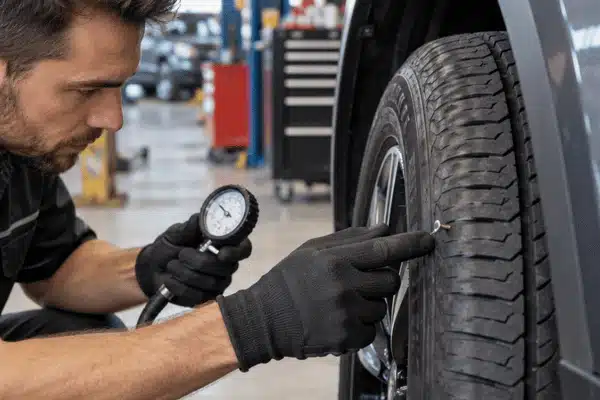
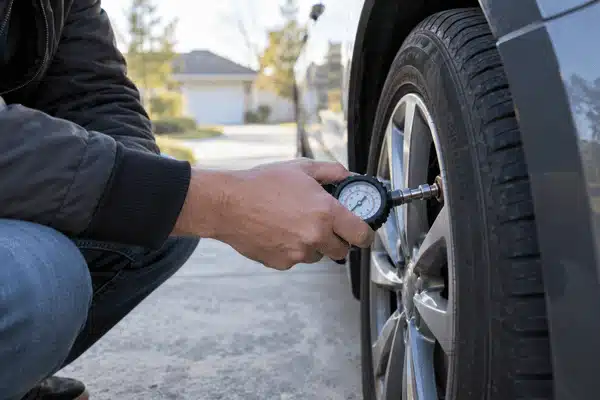
Use a gauge before driving or after 3 hours parked.
Check the recommended PSI. Front and rear may differ.
Use the door-label PSI, not the tire sidewall maximum.
Use your vehicle’s reset steps or recommended drive.
If it stays on or returns, have leaks and sensors checked.
There’s no single reset method that works for every car. Your owner’s manual will tell you whether the system needs a drive, a button press, or another step.
Don’t clear the light just to get rid of it. Make sure your tires have the right amount of air first.
You’ve checked all four tires, and the readings look right. So why won’t the warning disappear?
A few things could explain it:
If you’re unsure what’s causing the problem, a shop can check for leaks and test the system.
Texas Star Tire & Auto Repair offers tire repair and tire services in Waco. Its ASE- and TIA-certified technicians can help identify tire and TPMS issues.
A failed sensor doesn’t always mean a huge repair bill. Still, the price depends on your car and the type of sensor it uses.
RepairPal’s September 2026 national estimates place TPMS sensor replacement at around $240 to $299.
| Service | Estimated Cost |
| Replacement parts | 164–187 |
| Labor | 77–112 |
| Estimated total | 240–299 |
These figures are national estimates, not a fixed local price. Your actual bill may change based on the vehicle, parts, and labor.
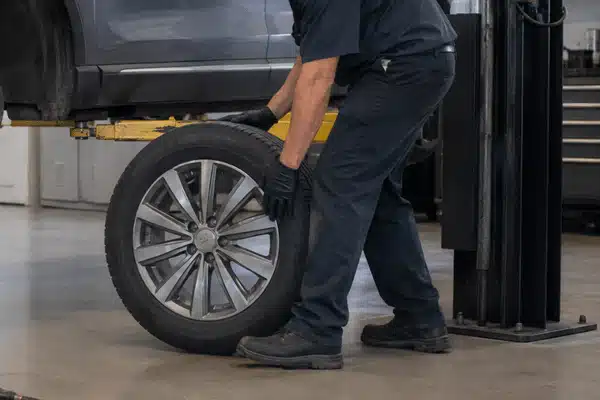
Labor is part of the cost because the sensor sits inside the wheel. According to RepairPal, the tire has to be separated from the wheel to reach it, and after installation, the sensors are relearned, or the vehicle is driven a short distance.
Before paying for a new sensor, have the system tested. Sometimes the problem only requires a reset or relearn.
If you’re already getting new tires, ask about replacing worn sensors during the same visit. It may save you another installation charge later.
That depends on how much air your tires have lost.
Low pressure affects how your car handles and stops. It also causes extra heat inside the tire, raising the risk of damage or failure.
If the light comes on, take these steps:
Even a tire that looks normal can be underinflated. It’s worth taking a few minutes to check before driving farther.
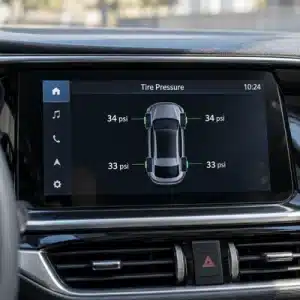
Tire pressure systems have changed over the years. Some 2026 vehicles show the pressure of each tire, while others still rely on a simple dashboard warning. Federal rules allow either approach, but if a vehicle’s warning identifies which tire is low, it must identify the correct one.
There are two main types:
Some vehicles also let owners check tire pressure through a connected phone app.
These features can make tire care easier, but regular pressure checks still matter.
A sudden drop in temperature can lower the air pressure inside your tires. AAA estimates a loss of about 1 PSI for every 10°F drop. Check your cold tire pressure and add air if it’s below the recommended level.
A flashing warning usually means something isn’t working properly within the TPMS. It could be a dead sensor battery, a damaged sensor, or another system fault. A technician can test the system to find out what’s wrong.
Check your tire pressure with a gauge before trying to clear the warning. If any tire is low, add air until it reaches the PSI listed on your driver’s door sticker. From there, check your owner’s manual to see whether your car needs a dashboard reset or a short drive.
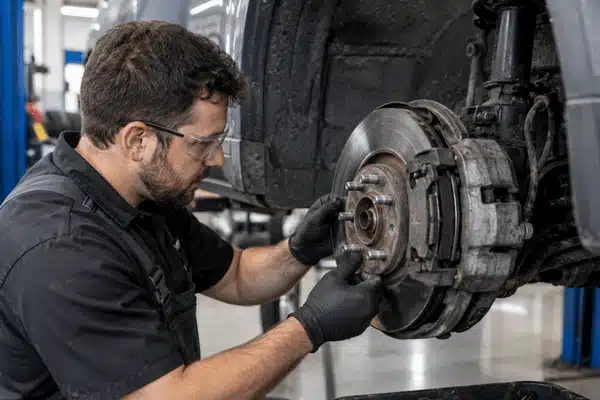
Your tires might have enough air, but that doesn’t mean the warning system is working properly. Sometimes a sensor stops sending readings, or the light stays on after you’ve had tire work done. A tire shop can check for slow leaks and see whether one of the sensors is causing trouble.
RepairPal’s September 2026 figures put the average replacement estimate between $240 and $299 nationwide. You could pay more or less depending on your car and the work involved. Before buying a new sensor, ask the shop to test the old one to make sure it really needs replacing.
Once a month is a good habit, and it’s what NHTSA recommends. Check again before a long trip, especially if a cold front has just moved through. Try to do it before your first drive of the day, while the tires are still cold.
A tire pressure light on a chilly Waco morning may be nothing more than a reminder to add air. But if it keeps coming back, don’t assume the weather is to blame. Texas Star Tire & Auto Repair has served Waco drivers since 1982, helping with tire problems big and small. Still dealing with that warning light? Book a tire inspection with Texas Star Tire & Auto Repair and get help finding the cause.